Electrical DIY: Essential, Safe Tasks for Every Homeowner (And When to Call a Pro)
Electricity powers our homes but commands respect. While significant electrical work absolutely requires a licensed professional, there are several safe, essential tasks every homeowner can—and should—learn to handle. This guide covers the fundamentals of DIY electrical work, with a heavy emphasis on safety and knowing your limits.
⚠️ The Golden Rules of DIY Electrical Safety
Before touching a single wire, internalize these non-negotiable rules:
- Power Down at the Source: Always turn off the power at the circuit breaker panel. Use a non-contact voltage tester to double-check wires are dead before working.
- Get a Permit for Major Work: Adding new circuits, running cable, or upgrading a panel typically requires a permit and inspection. This ensures safety and code compliance.
- Never Work on “Live” Components: This includes outlets, switches, and fixtures with power flowing. The risk of shock or electrocution is severe.
- Respect Your Panel: The main breaker panel is the heart of your home’s electrical system. Be deliberate and careful when working inside it.
Essential DIY Electrical Toolkit
- Non-Contact Voltage Tester: Your most important safety tool.
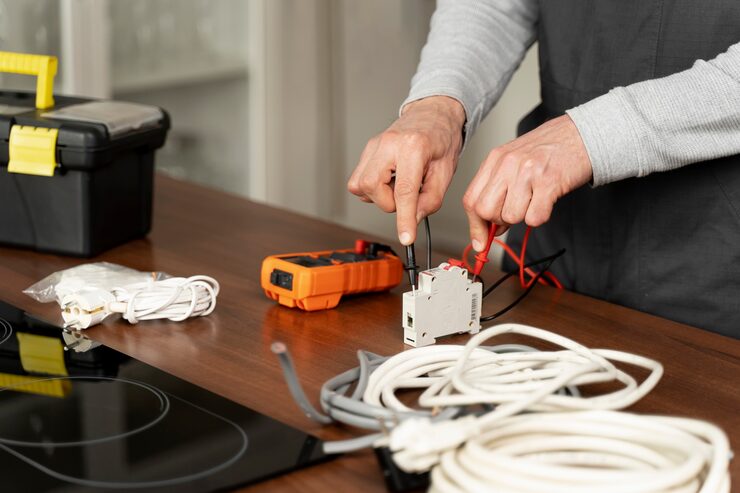
- Multimeter: For diagnosing issues.
- Circuit Finder: Identifies which breaker controls each outlet.
- Screwdrivers (Insulated/Non-Metallic Handles): Flat-head and Phillips.
- Wire Strippers & Needle-Nose Pliers.
- Outlet Tester: A simple 3-light plug that diagnoses wiring faults.
Task 1: Resetting a Tripped Circuit Breaker
Symptom: Power suddenly goes out in one part of the house.
Step-by-Step:
- Go to your main breaker panel.
- Identify the tripped breaker. It will be in a middle position (neither fully ON nor OFF).
- FIRST, turn off or unplug devices on that circuit. This is crucial to prevent an immediate re-trip.
- Firmly push the breaker switch to the OFF position, then back to ON. It should click into place.
- If it trips again immediately, you have a persistent fault. Stop resetting it and call an electrician.
Task 2: Replacing a Standard Outlet (Receptacle)
Why: An outlet is cracked, doesn’t hold plugs snugly, or you want to upgrade to a USB model.
Step-by-Step:
- Turn Off Power: Locate and switch off the correct breaker. Verify it’s off by plugging a lamp into the outlet.
- Remove the Old Outlet: Unscrew and remove the faceplate. Unscrew the mounting screws holding the outlet to the box. Gently pull the outlet out.
- Disconnect Wires: Take a photo of the wiring configuration first! Loosen the terminal screws and disconnect the wires (typically black/hot to brass, white/neutral to silver, bare/green ground to green screw).
- Connect the New Outlet: Attach the wires to the corresponding screws on the new outlet in the exact same configuration. Ensure the hooks on the wires wrap clockwise around the screws for a secure connection.
- Secure & Test: Neatly push the outlet back into the box, secure with screws, and attach the new faceplate. Restore power and test with your outlet tester.
Task 3: Fixing a Loose or Flickering Light Switch
Why: A switch feels wobbly, crackles, or lights flicker when toggled.
Step-by-Step:
- Turn Off Power & Verify: As always, kill the power at the breaker and test.
- Remove the Switch Plate: Use a flat-head screwdriver.
- Inspect & Tighten: Unscrew the switch from the electrical box and pull it out. Check that all wire connections on the side of the switch are tight. Often, simply tightening the terminal screws solves the issue.
- Check for Wear: If the switch itself feels gritty or broken, replace it. Note if it’s a single-pole (two terminals) or three-way (three terminals) switch and buy an identical one.
- Reconnect: Transfer wires one at a time to the exact same terminals on the new switch.
Task 4: Identifying Faulty Wiring (With Diagnostic Tools)
Learn to recognize warning signs that need professional attention.
- Using an Outlet Tester: Plug it in. The light pattern will indicate problems like “open ground,” “reverse polarity,” or “open neutral.” These are wiring errors that an electrician should fix.
- Visual Red Flags:
- Frequent Breaker Trips: More than occasional trips signal an overloaded circuit or a short.
- Burning Smell or Scorch Marks: At outlets, switches, or the panel. IMMEDIATELY turn off power and call an electrician.
- Flickering Lights that aren’t solved by tightening the bulb or switch.
- Buzzing or Sizzling Sounds from outlets or switches.
- Warm or Discolored Outlets/Switches.
Task 5: Replacing a Light Fixture
Why: Updating decor or replacing a broken fixture.
Step-by-Step:
- Turn Off Power & Verify: Use your voltage tester on the wires in the ceiling box.
- Remove Old Fixture: Have a helper hold it. Unscrew the mounting hardware, lower the fixture, and disconnect the wires (usually black to black, white to white, ground to ground).
- Prepare the New Fixture: Follow its instructions to assemble any parts. It will have its own set of wires and a mounting bracket.
- Connect Wires: Attach the fixture wires to the house wires using wire nuts (plastic connectors). Match colors, twist clockwise, and ensure no bare wire is exposed. Tuck wires neatly into the box.
- Mount & Secure: Attach the fixture to the mounting bracket, install bulbs, and restore power.
🚨 When to CALL A LICENSED ELECTRICIAN (No Exceptions)
These tasks are NOT for DIYers due to extreme risk of fire, shock, or creating code violations that affect insurance and resale value.
- Upgrading or replacing the main electrical service panel.
- Running new circuits or cables through walls.
- Diagnosing or fixing frequent, unexplained breaker trips.
- Any work involving the meter base or service entrance cables (before the main panel).
- Installing or repairing 240-volt appliances (dryers, ranges, AC units) unless you are simply replacing an existing plug.
- Rewiring any part of the house.
- If you feel unsure, confused, or in over your head at any point.
Final Pro Tip: When in doubt, the answer is always to call a professional. A qualified electrician ensures your home is safe, code-compliant, and protected. Think of DIY electrical as minor maintenance and troubleshooting—not system overhauls.
By mastering these safe, foundational tasks, you gain confidence and keep your home running smoothly while understanding the critical line not to cross. Stay safe and empowered